
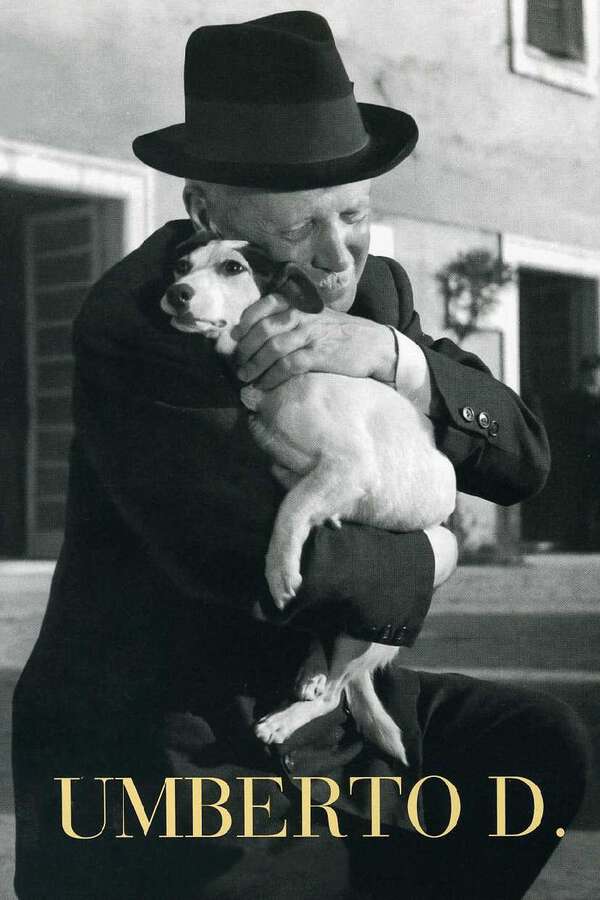
With its elderly protagonist facing homeless, Umberto D (Italy 1952) might be the HAAG-iest movie imaginable. We meet the title character at a protest in favour of raising the aged pension, and when the police break up the rally we see that this barely registers as a disappointment because life has already sucked so much of the hope out of him. He returns home to a boarding house where an unfeeling landlady tells him he’ll be evicted at the end of the month if his rent isn’t paid. The rest of the movie follows his desperate attempts to keep a roof over his head.
Umberto has only one real companion – his dog, Flike. They share whatever food Umberto can afford, and Umberto doesn’t seem nearly as concerned about his own impending homelessness as he is about what it means for Flike. The most suspenseful scenes in the movie come when Flike is in danger – for example, when we watch Umberto visit a pound where the dog may already have been destroyed. His rising despair as he faces the possibility that he can’t keep both himself and Flike alive is as painful as movies get.
Obviously, this is not an especially cheerful movie – and may be too close to home for some. Umberto’s plight was meant to symbolise the social conditions of postwar Italy, but watching from our perspective, it’s fascinating to ask what does and doesn’t resonate with today’s Australia. Pensions too low? An older man and his dog facing eviction? Social isolation? Inadequate social services? The issues the movie raises have probably all gotten both better and worse for us than they were then, and that can be important to think about.
Umberto D. can be gruelling, but never wallows or indulges in sadness for its own sake. A cast of mostly nonprofessional actors keeps the movie grounded and realistic, and De Sica has a great eye for those little details that make everyday life beautiful even in the midst of painful realities. Get the tissues ready and check out one of the most powerful movies of all time. And let us know what you thought!